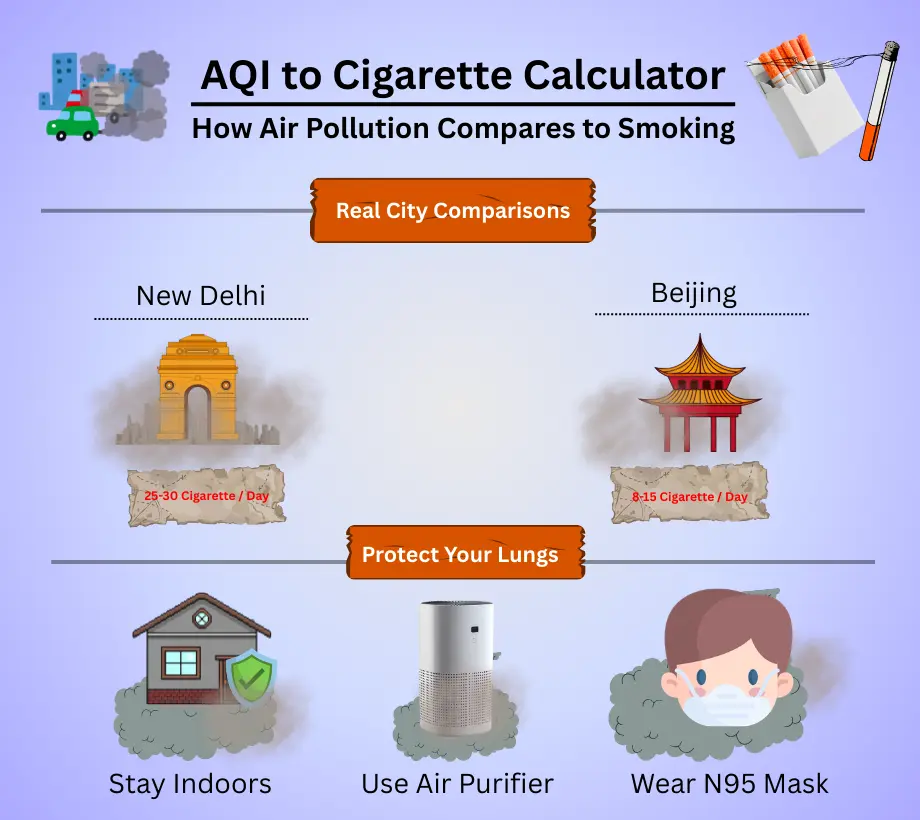
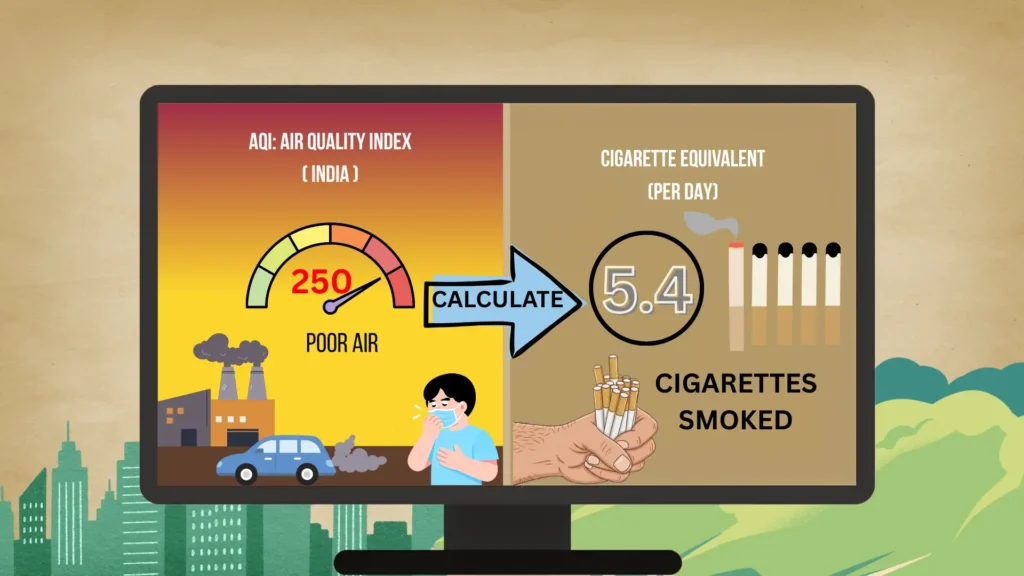
Air pollution has become one of the most serious threats to the environment worldwide, and air quality is gradually deteriorating due to air pollution. The risk of many diseases is increasing day by day due to air pollution. Many people check the Air Quality Index (AQI) daily, but the results often seem strange and difficult to understand. Scientists and environmental experts compare the AQI to cigarette smoke to assess the health impact of air pollution. This comparison helps people understand how harmful polluted air can be to the lungs.
Simply put, breathing highly polluted air for a day can expose your lungs to toxins equivalent to smoking several cigarettes. Comparing AQI to Cigarettes helps people understand air pollution and may also help them take it more seriously and adopt preventative measures.
Air Quality Index (AQI) Overview
The Air Quality Index (AQI) is a measurement used to assess air quality. Governments and environmental agencies use the AQI to indicate how clean or polluted the air is. Several pollutants are considered to measure the AQI, including:
- PM2.5 (fine particulate matter)
- PM10 (coarse particles)
- Nitrogen dioxide (NO₂)
- Sulfur dioxide (SO₂)
- Ozone (O₃)
- Carbon monoxide (CO)
Of all the particles listed above, PM2.5 particles are considered the most dangerous because they are small enough to penetrate deep into the lungs and even enter the bloodstream. PM2.5 particles have a very negative impact on the human body.
The higher the AQI number, the more dangerous it is to health. AQI levels are generally classified as follows:
- 0–50: Good air quality
- 51–100: Moderate
- 101–150: Unhealthy for sensitive groups
- 151–200: Unhealthy
- 201–300: Very unhealthy
- 301+: Hazardous
What Is the AQI to Cigarette Comparison?
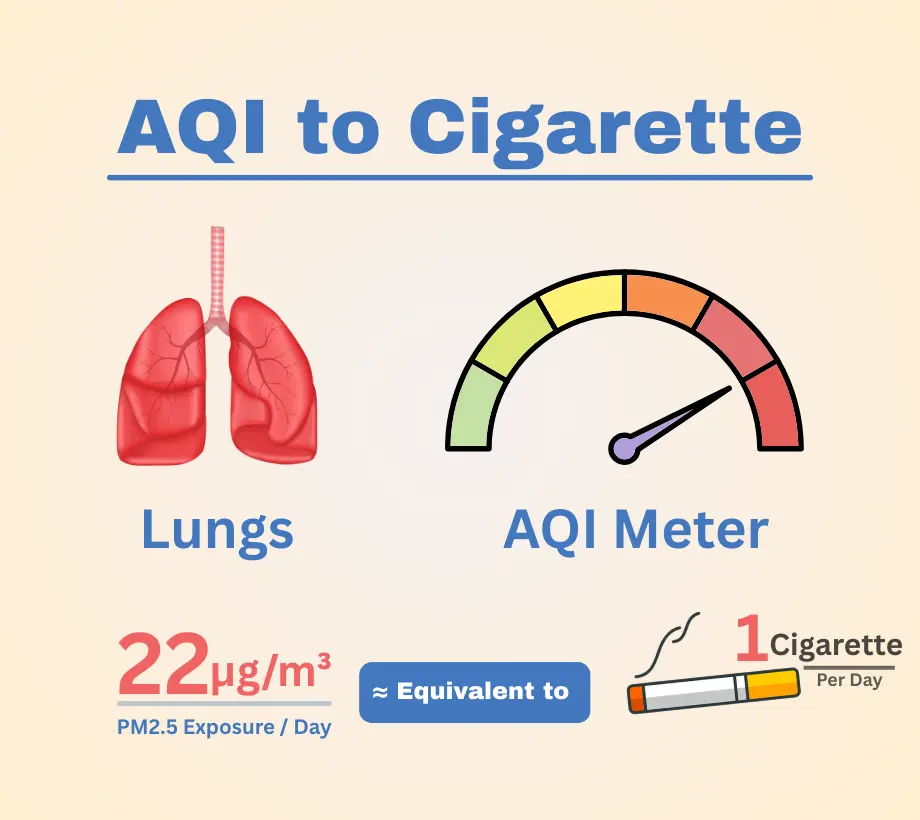
The AQI is compared to cigarette smoking to estimate how similar exposure to pollution is to cigarette smoking. Researchers compared the AQI to cigarette smoking primarily based on exposure to PM2.5, one of the most harmful components of air pollution. According to some environmental studies, daily exposure to approximately 22 µg/m³ of PM2.5 poses a long-term health risk and is equivalent to smoking approximately one cigarette daily.
Using the above idea, experts sometimes equate the effects of air pollution with smoking cigarettes. While the comparison of AQI to Cigarette isn’t entirely accurate, it helps people understand how harmful polluted air can be. The example below can help you understand the implications.
| AQI Level | Approximate Cigarette Equivalent (per day) |
| 50 | About 0.5 cigarettes |
| 100 | About 2 cigarettes |
| 150 | About 2 cigarettes |
| 200 | About 3–4 cigarettes |
| 300+ | 6 or more cigarettes |
How Air Pollution Damages Your Lungs
The respiratory system is affected in various ways by air pollution. The fine particles and gases enter the lungs through the process of breathing, causing inflammation.
1. Inflammation of Lung Tissue
The irritant effect of the pollutants causes inflammation and swelling of the lung lining. This may result in damaged lungs and reduced lung function.
2. Reduced Oxygen Exchange
Small particles can get stuck in the small airways and alveoli, which makes it hard for the lungs to quickly move oxygen and carbon dioxide around.
3. Increased Risk of Respiratory Diseases
Long-term exposure to polluted air has been linked to several lung health problems. For instance, people who breathe in polluted air for a long time are more likely to get asthma and bronchitis, which can make it hard to breathe and make the bronchial tubes swell. Polluted air also makes people more likely to get lung infections because it weakens the body’s natural defences. Long-term exposure to dirty air also makes the lungs less able to do their job of bringing oxygen to the body.
4. Long-Term Lung Damage
Similarly, while cigarette smoke hurts, exposure to polluted air can slowly damage the lungs, leading to breathing problems.
Short-Term Symptoms of Breathing Polluted Air
Children, older adults, and people with asthma are more likely to be hurt by bad air quality. In the short term, breathing in bad air can be bad for your health. When the air quality is bad, these are some common health problems that can happen:
- Persistent cough
- Throat irritation
- Difficulty breathing
- Chest tightness
- Itchy eyes
- Fatigue
Long-Term Health Risks
Long-term exposure to polluted air can lead to serious health problems, including lung cancer, chronic respiratory diseases, heart disease, stroke, and a shortened lifespan. Because fine particles in the air can enter the bloodstream, the damage isn’t limited to the lungs and can have a wide range of adverse effects.
Why the Cigarette Comparison Matters
Air pollution is invisible, so people tend to underestimate it. Comparing the AQI with cigarettes makes a small number understandable to people. For example, telling you that the air quality today is equivalent to smoking three cigarettes helps you understand the health risks more clearly than seeing an AQI of 200.
Air pollution awareness encourages people to do things like go outside less on polluted days, wear protective masks, use indoor air purifiers, and support pollution-reduction policies.
How to Protect Your Lungs from Air Pollution
There are a lot of things you can do to cut down on pollution, but you can’t stop it completely. You need to check the air quality index (AQI) level every day to get the health benefits of breathing cleaner air. You should also check the air quality app often to see how bad the air is where you live. This will help you make plans for your day. Also, if the air quality in your area isn’t good, wearing a mask like an N95 or KN95 will help keep PM2.5 from getting into your body.
Everyone is recommended to avoid outdoor activities during unhealthy levels of AQI, which will help reduce exposure to polluted air. Improving the quality of indoor air is also important for everyone. You can do this in a lot of different ways, like using an air purifier, closing the windows when po tollution levels are high, and making sure that air can flow freely. Thus, the indoor air will be made safer for you. The quality of air conditioning will also be improved by keeping plants inside the house.
Conclusion
People often call air pollution the invisible killer. People breathe in air pollution every day without fully understanding its impact. Comparing AQI and cigarette smoke helps you better understand pollution levels. Comparing AQI to cigarette smoke gives you a better idea of how harmful poor air quality can be to the lungs.
If you never smoked but live in a highly polluted area, over time, your lungs may be at risk similar to smoking multiple cigarettes. By monitoring AQI levels and taking preventative measures, people can reduce their risk and protect their respiratory health. You need to understand how air pollution is affecting your lungs. You need to make healthy choices and take the first step toward supporting clean air.
FAQ’s
Q. Do air purifiers really help reduce pollution indoors?
Air purifiers with HEPA filters can significantly reduce fine particles like PM2.5 indoors and reduce air pollution. Air purifiers are especially helpful in cities where air pollution is common.
Q. How can I protect my lungs when AQI is high?
If you live in a city with high pollution levels, you should monitor the AQI updates daily, wear a good quality mask like N95 or KN95 when going out, avoid strenuous outdoor activities, use an air purifier indoors, and keep the windows closed when the pollution is high.
Q. What does the AQI to cigarette comparison mean?
Ans. By comparing AQI and cigarettes, you can easily understand how harmful air pollution can be.
Q. Why is PM2.5 considered dangerous for the lungs?
PM2.5 particles are very small and can penetrate deep into your lungs. Because of their small size, they can also enter the bloodstream, causing lung inflammation and breathing problems. They can also cause long-term damage to your lungs and heart.